

Shopify Cart Abandonment Recovery: 7 Strategies That Actually Work

It happens every day. A shopper spends twenty minutes browsing your store, carefully selects items, heads to the checkout page, and then vanishes. According to the Baymard Institute, the average shopping cart abandonment rate hovers around 70%. That is a massive chunk of your potential revenue walking out the digital front door just before paying.
While most merchants rely on default email templates to win these customers back, the landscape has changed. Buyers are experiencing inbox fatigue, and generic messages no longer cut it. Implementing smarter shopify abandoned cart recovery strategies is now essential for protecting your profit margins and scaling your business efficiently.
In this article, we will clarify the crucial technical differences in abandonment types, explore proactive conversion protection, and break down advanced recovery tactics. From psychological triggers to precise multi-channel timing, you will learn exactly how to plug the leaks in your checkout flow.
Let's get started!
I. Overview of Cart vs. Checkout Abandonment
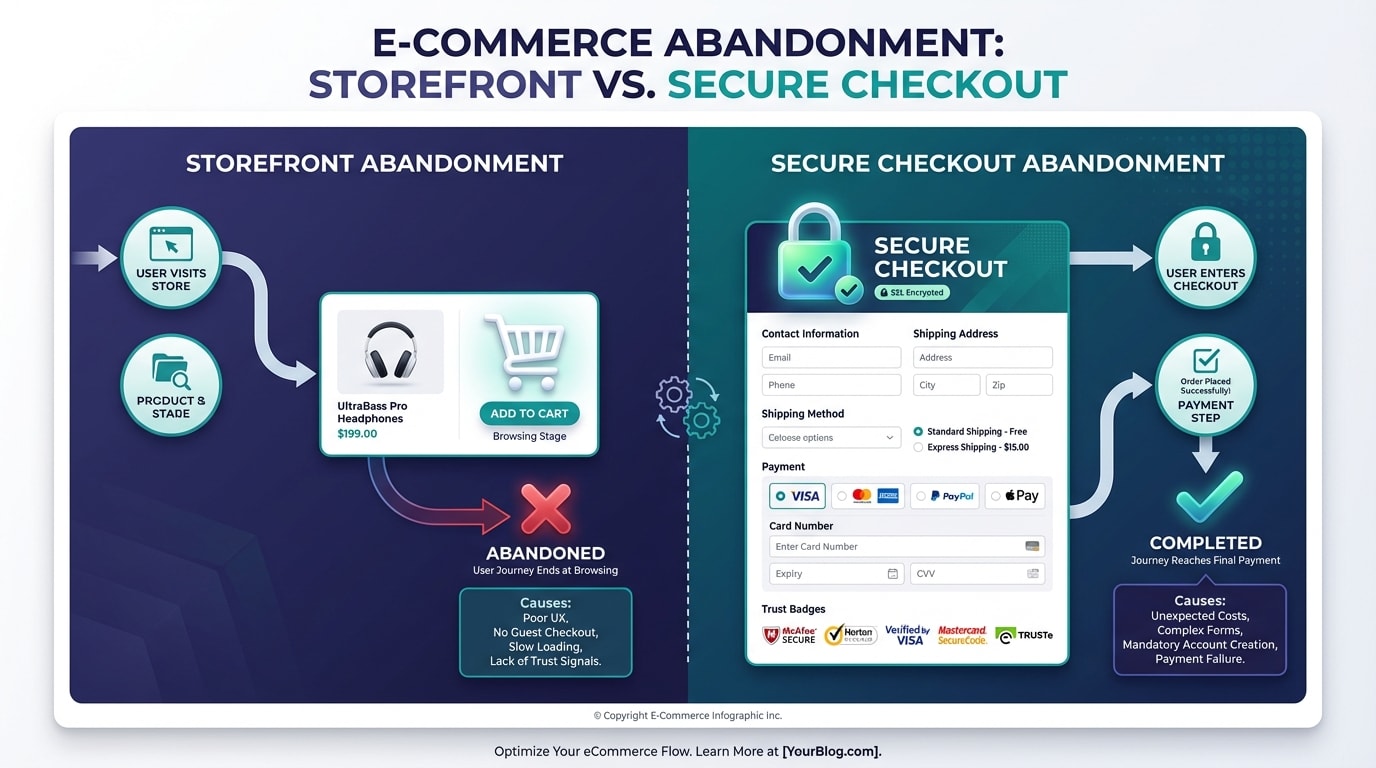
Understanding where your customers drop off dictates how you recover them
Before building a recovery sequence, you need to understand exactly where your customers are dropping off. Treating all abandoned sessions the same will skew your data and waste your marketing budget.
1. The Technical Difference
An abandoned cart occurs when a user adds items to their basket but never clicks the checkout button. At this stage, you usually do not have their email address. An abandoned checkout happens when the user initiates checkout and enters their contact details but does not complete the payment. You cannot send recovery emails to cart abandoners if they haven't provided contact info. This is why your strategy needs both proactive and reactive layers.
2. Platform Constraints and Setup
Shopify handles these two stages differently. Natively, abandoned checkout recovery is restricted primarily to the Online Store and Buy Button channels. This is an important detail if you use Shopify POS. Advanced developers often use the Shopify GraphQL abandoned checkouts API to extract custom data, but for most merchants, relying on native tools combined with a solid app stack is the most reliable path forward.
3. The Hidden Cost of Shipping
Why do people leave in the first place? Hidden shipping costs shown late in the flow are the primary culprit for abandonment. When you surface this data earlier in the buying journey, the user experience changes dramatically. Proactive recovery always beats reactive recovery because it removes the objection before the customer ever considers leaving.
II. Foundation: Proactive vs. Reactive Recovery Tools

Building a complete conversion protection system requires multiple touchpoints
Rather than relying on a single method, top-performing merchants build a tech stack that catches shoppers at different stages of intent. A strong foundation combines tools that act before the customer leaves with tools that reach out after they are gone.
Here is how a complete recovery stack looks:
- Proactive Protection (Fordeer Sales Pop Up): Use exit-intent popups to offer shipping transparency or immediate discounts right when the user's mouse moves toward the close button. This stops abandonment before it technically happens.
- Advanced Email Automation (Klaviyo): Replace basic Shopify emails with Klaviyo abandoned cart dynamic content blocks. These pull in high-resolution product images, personalized recommendations, and targeted copywriting based on the exact cart value.
- Direct SMS Marketing (SMSBump): Reach customers directly on their mobile devices for time-sensitive alerts. SMS bypasses crowded email promotional tabs entirely and commands immediate attention.
- Browser Push Notifications (PushOwl): This is a lightweight alternative to capture users who abandon carts but haven't provided an email address or phone number yet. It asks for permission in one click and delivers native browser alerts.
III. 7 Strategies to Recover Lost Shopify Revenue
Now that your foundation is set, let us look at the practical implementation. Moving beyond basic reminders requires addressing the psychological reasons customers leave in the first place.
1. Deploy Exit-Intent Popups for Upfront Shipping Transparency
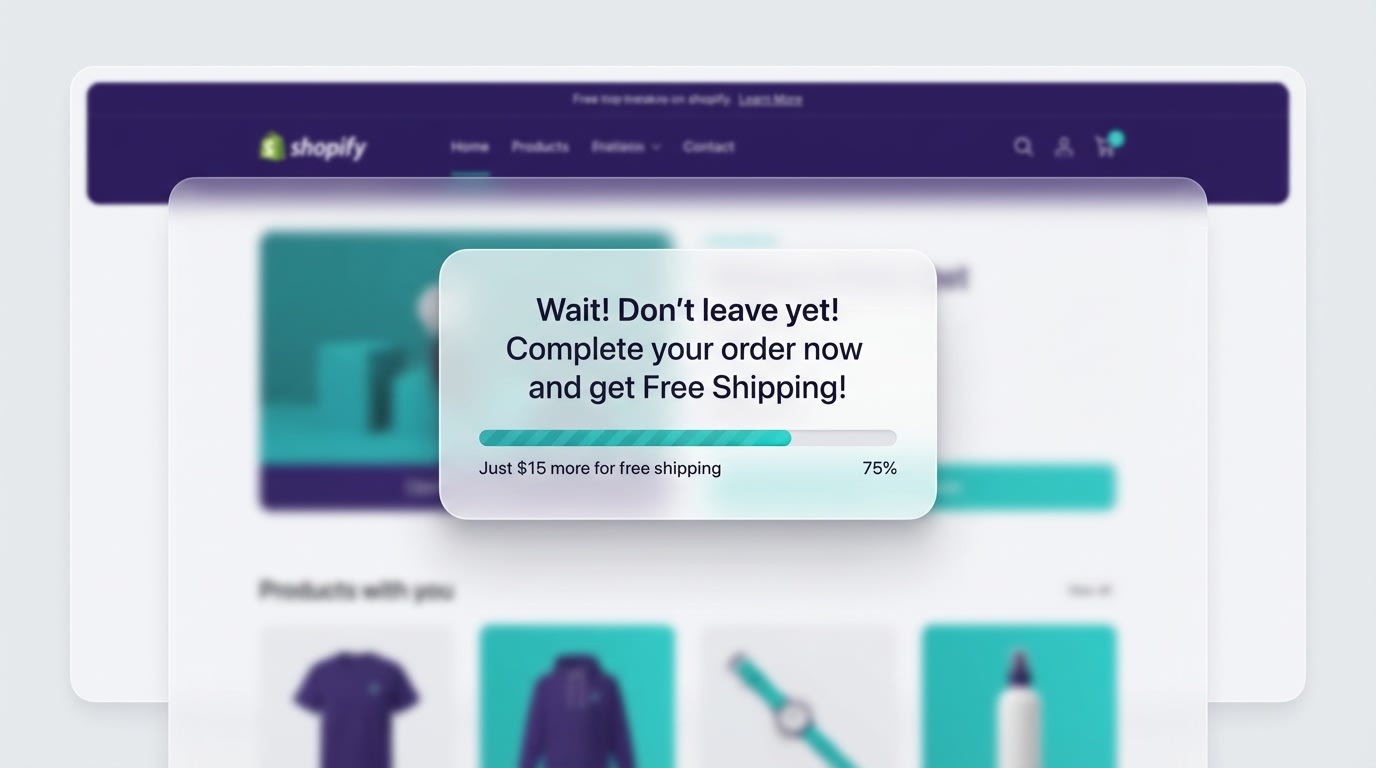
Address objections immediately before the customer leaves your site
If unexpected shipping costs are the leading cause of abandonment, address them before the user bounces. A proactive popup acts as a first line of defense. It solves the objection instantly without waiting for an email open. Understanding the power of exit-intent technology and exit-intent popups will transform how you capture lost sales.
How to implement:
- Trigger on intent: Set your Fordeer popup to trigger only when the cursor leaves the browser viewport.
- Offer clarity: Display a message like, "Wondering about shipping? It is flat-rate $5, or free over $50."
- Keep it frictionless: Do not ask for an email in this specific popup. Just provide the information they need to feel confident completing the purchase.
2. Implement a Strategic Discount Ladder
Throwing a 20% discount at every abandoned checkout destroys your profit margins. A discount ladder is a much smarter approach.
- Message 1 (No discount): Focus on customer service. Ask if they experienced a technical glitch.
- Message 2 (Small incentive): Offer free shipping or a 5% discount to nudge them.
- Message 3 (Strong incentive): Offer a 10% to 15% discount as a final attempt to save the sale.
This tiered approach ensures you only give away margin when absolutely necessary to secure the conversion.
3. Leverage Psychological Triggers and FOMO
Your abandoned cart email subject lines need to evoke emotion rather than just stating, "You forgot something." Loss aversion is a powerful psychological trigger. People hate missing out on things they already consider theirs.
Here is how to use triggers effectively:
- Scarcity: Mention low stock levels. Try subject lines like, "Your cart is expiring, and we only have 2 left in your size."
- Social Proof: Include a brief 5-star customer review of the exact product left in the checkout.
- Subject Line Testing: A/B test urgency-driven subjects against curiosity-driven ones.
Pro Tip: Use dynamic inventory tags in your automated flows to show real-time stock levels. This creates authentic urgency.
4. Segment Recovery Flows by Cart Value
Not all abandoned checkouts are created equal. A $15 cart requires a different approach than a $500 cart. Treating high-value carts the same as low-value carts results in lost VIP customers or wasted margin on small orders.
High-Value Carts:
Route these to a dedicated VIP flow. Offer a higher tier discount, free expedited shipping, or even a personalized plain-text email from the founder asking if they need help.
Low-Value Carts:
Keep margins strict. Do not offer deep discounts. Instead, focus on highlighting product benefits or offering a small bundle deal to increase the average order value if they return.
5. Enable Cross-Device Cart Persistence
Shoppers frequently browse on their phones during the commute and switch to a desktop to finalize the purchase later. If a user logs in on their desktop and finds an empty cart, the friction is usually too high for them to go hunt down those items again.
How to fix this:
- Persistent apps: Utilize Shopify apps that save cart contents across devices when a user is logged into their account.
- Capture early: Use early capture methods to boost conversions with exit-intent popups on your Shopify store by asking them to save their cart to their email.
- Clear pathways: Ensure your recovery emails contain a direct link that reconstructs the exact checkout session.
6. Orchestrate Multi-Channel Follow-Ups
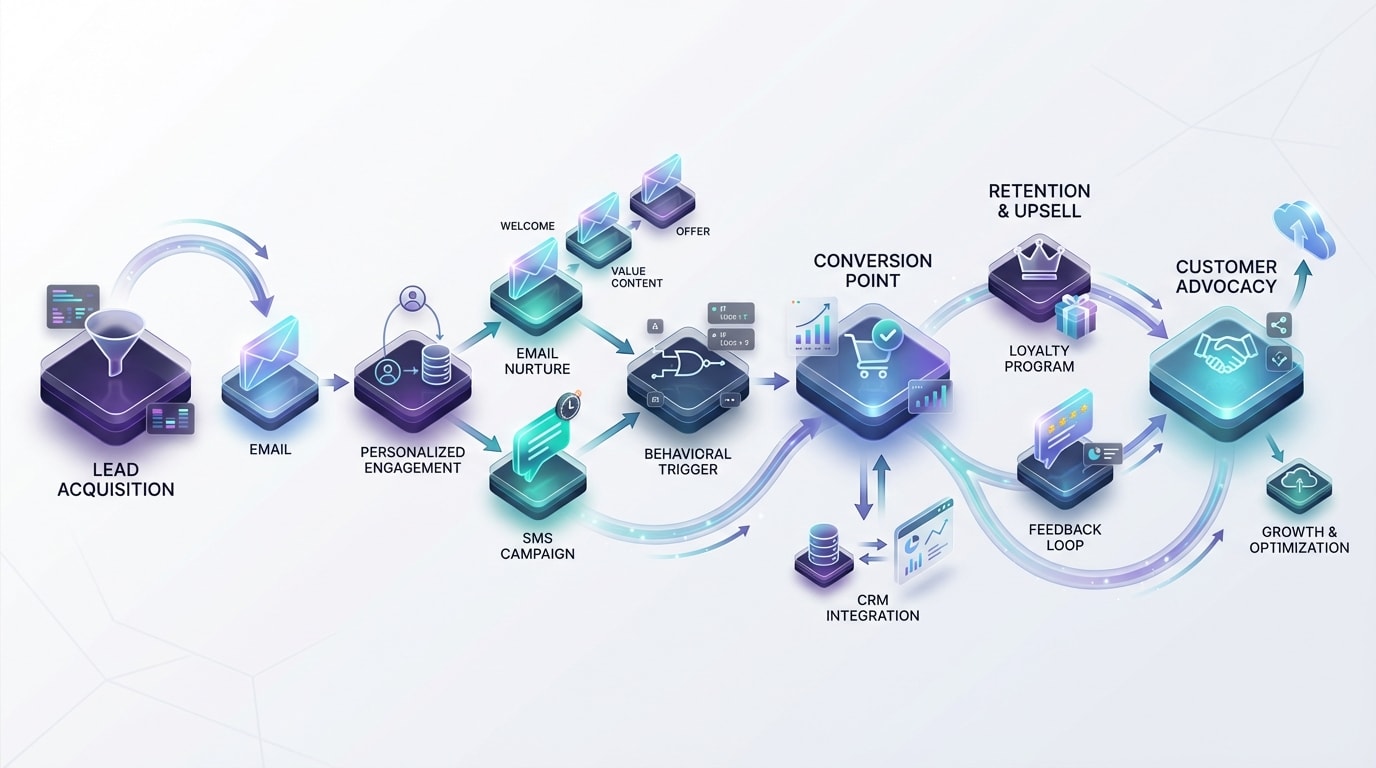
Coordinate your messaging across channels to avoid spamming your customers
Relying solely on recovery emails means battling a 20% average open rate. Integrating SMS brings a 90% open rate to your recovery efforts. Catching the customer where they are most active dramatically increases your overall recovery rate.
How to implement:
- Do not overlap: If a customer opens the first email, delay the SMS.
- Keep SMS punchy: Use SMS for the highest-urgency messages.
- Use email for visuals: Use email to show high-quality images of the abandoned products.
7. Ensure Strict GDPR & TCPA Compliance
Aggressive multi-channel recovery is highly effective, but comes with legal responsibilities regarding user consent. Non-compliance with SMS and email marketing laws can result in massive fines and permanent bans from marketing platforms.
Compliance checklist:
- Explicit opt-in: Ensure your checkout has a clear, un-checked box for SMS and email marketing consent.
- Double opt-in for EU: If you sell internationally, implement double opt-in for GDPR compliance.
- Easy opt-out: Every single recovery message, especially SMS, must include a clear instruction to reply STOP to opt out.
IV. The Golden Window Timing Sequence
Knowing what to say is only half the battle. Knowing exactly when to say it determines whether your message converts or annoys the customer.
Step 1: The 1-Hour Mark (Customer Service Check)
The first hour after abandonment is critical. The shopper is still warm and likely still at their computer or on their phone. Do not offer a discount here. Send a helpful, service-oriented message asking if they experienced any technical issues checking out, and include a clear button to return to their cart.
Step 2: The 12-Hour Mark (Urgency & Social Proof)
If they haven't converted, wait until the 12-hour mark. This is the time to introduce psychological triggers. Remind them that their items are not reserved forever. Include a strong customer review of the product to validate their original intent to purchase.
Step 3: The 24-Hour Mark (The Final Incentive)
This is where your discount ladder peaks. Send a clear, time-limited offer to close the deal. For example, tell them to take 10% off if they complete their order today. If you are using multi-channel orchestration, this is an excellent time to trigger an SMS message if the previous emails were ignored.
V. Conclusion
So there you go—optimizing your checkout flow doesn't have to be a guessing game. By understanding the difference between cart and checkout abandonment, implementing proactive exit-intent popups, and orchestrating a well-timed sequence, you can plug the revenue leaks in your funnel.
Preparation is important. You do not have to tackle everything at once. Start by auditing your current Shopify settings, craft a basic discount ladder, and gradually layer in SMS and psychological triggers as you grow. The revenue you save goes straight to your bottom line.
Follow the Fordeer Team for more useful updates!
- Install Fordeer Apps for Free
- Get immediate assistance by chatting with us
- Join Fordeer Commerce Community for fresh app updates, expert tips, and private deals.