

VAT Invoice Requirements in Germany: Shopify Checklist (2026)

For ecommerce merchants selling into Europe, receiving a letter from the German Tax Office (Finanzamt) is the ultimate nightmare. A single missing tax number or incorrectly formatted reverse charge text can lead to rejected input tax deductions, delayed payments, or hefty financial penalties. Worse still, the rules are about to change drastically.
Understanding VAT invoice requirements germany is no longer just about filling out a static template. With the new Wachstumschancengesetz (Growth Opportunities Act) rolling out, the transition from simple PDFs to structured electronic data is imminent. If your current invoice app is merely slapping text onto a document, you are likely falling behind the compliance curve.
In this guide, we break down exactly what mandatory information must be on your German invoices, the exact legal phrasing to use, and how to bulletproof your Shopify store for the 2025 e-invoicing mandates and GoBD archiving rules.
Let's get started!
I. Overview of German VAT Categories

Navigating the maze of German tax terminology doesn't have to be overwhelming.
Setting up your store for German compliance requires a clear understanding of local tax rules. Here is how the terminology and thresholds break down.
1. Steuernummer vs. USt-IdNr
Your Steuernummer is a local tax number assigned by the regional Finanzamt. You use this for domestic transactions within Germany. The USt-IdNr is your VAT Identification Number starting with the letters "DE". This is essential for cross-border EU trade and the OSS (One Stop Shop) scheme. Using the wrong one causes immediate invoice rejection by business buyers. It also flags your account during routine tax audits. Make sure your checkout captures the right identifier based on the customer's exact location.
2. The €250 Simplified Invoice Limit (Kleinbetragsrechnung)
Good news for B2C stores. Under Section 33 UStDV, if an invoice is under €250 (gross), you can issue a simplified invoice (Kleinbetragsrechnung). This requires much fewer details. You do not need to include the recipient's address or your tax number, saving massive time for low-value transactions. This rule keeps your daily operations moving fast.
3. B2B vs. B2C Invoicing Differences
B2B invoices face strict scrutiny. Buyers need perfect documentation to claim their input tax deduction. B2C requirements are more lenient, especially under the OSS scheme. To stay safe and compliant, maintaining a single, high-standard B2B-compliant template is your best operational route. This ensures every transaction meets the strictest rules automatically. If you sell globally, Global VAT Compliance: A Guide for Shopify Sellers is a great resource to map out your broader strategy and keep your store audit-ready.
II. The 2025 E-invoicing Mandate & GoBD Compliance
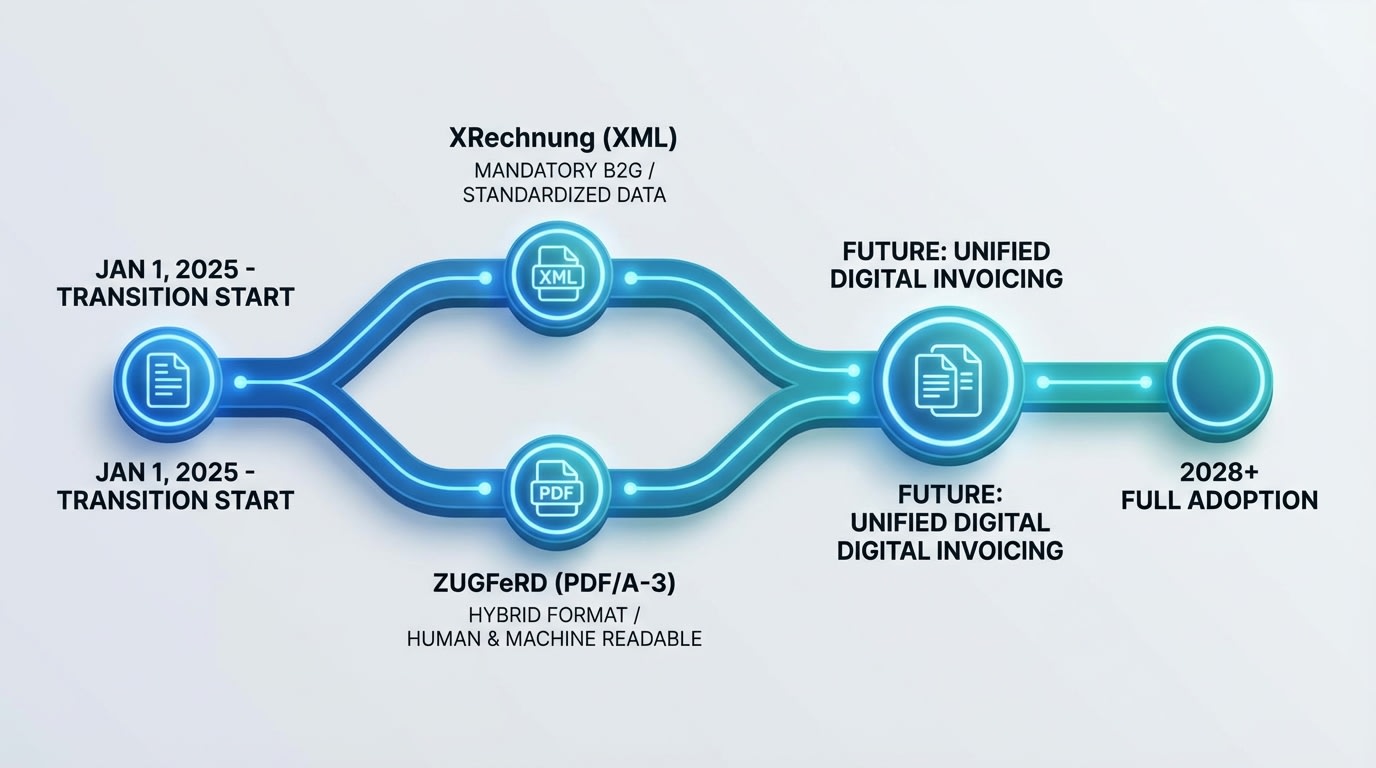
The transition timeline for mandatory B2B electronic invoices in Germany.
Static PDFs are becoming obsolete. The legal foundation of German invoicing is shifting toward locked, structured data.
1. Wachstumschancengesetz (The 2025 E-Invoice Law)
Starting January 1, 2025, domestic B2B transactions undergo a monumental shift. Standard PDFs will be legally reclassified as "other invoices" and eventually phased out entirely. An official e-invoice under EN 16931 requires structured data formats like ZUGFeRD or XRechnung. These formats embed XML data directly into the document so accounting software can read it instantly without human input. If your Shopify store relies on basic PDF generators, you need to upgrade your invoicing tech stack right now. Failing to do so means B2B buyers will reject your invoices starting next year.
2. GoBD: The 10-Year Unchangeable Archiving Rule
GoBD stands for the principles for proper management and storage of records. The law demands a strict 10-year retention period for commercial invoices. The catch is the Authenticity of Origin and Non-alterability requirement. Merely saving a Word document as a PDF is not GoBD-compliant because the file can be edited later. You must use automated, legally locked invoice generators to solve this compliance gap and protect your business. Modern Shopify apps track version history and lock the final document, ensuring you pass a GoBD audit with zero stress.
III. 8 Mandatory Elements to Meet German VAT Rules
Missing even one of these fields under Section 14 UStG can result in the buyer being denied their input tax deduction. This causes severe customer service disputes and delayed payments. Here is exactly what you need to include on every document.
1. Full Names and Complete Addresses
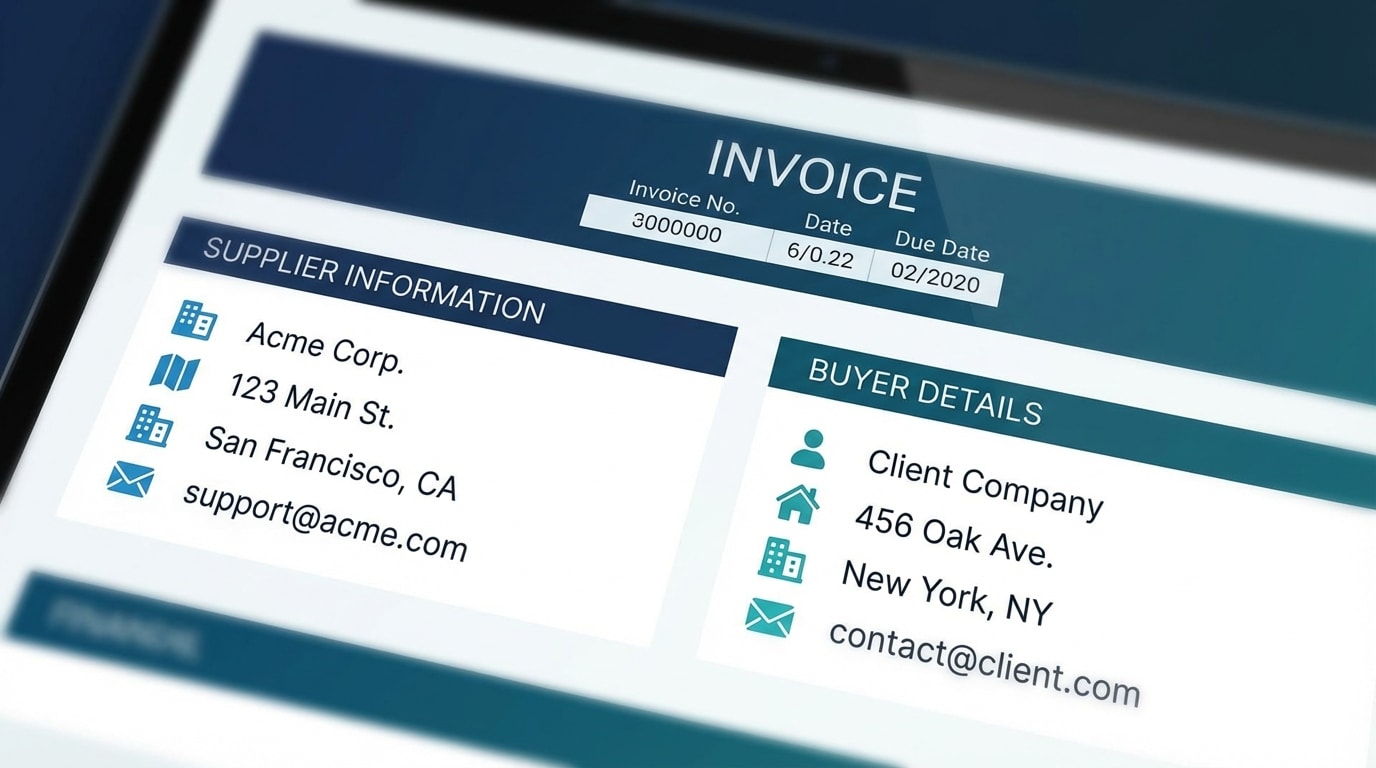
Both parties must be fully identified to pass tax office scrutiny.
The Finanzamt cross-checks addresses to prevent shell-company fraud.
Here is how to format your details:
- Supplier Details: Include your exact legally registered company name and physical address. Do not use abbreviations.
- Recipient Details: Match the buyer's official business registration exactly.
- PO Boxes: These are generally acceptable, but physical addresses are heavily preferred for B2B transactions.
2. The Correct Tax Identifiers
This is the number one reason German invoices are rejected by corporate accounting departments.
Make sure your numbers align:
- For Domestic German Sellers: Include your Steuernummer OR your USt-IdNr.
- For Intra-Community Supply: You must include both your USt-IdNr and the buyer's USt-IdNr.
- Placement: Keep these clearly visible in the footer or header of your PDF.
Pro Tip: Always validate a B2B buyer's USt-IdNr through the VIES database before removing VAT from their order. Invalid numbers make you liable for the tax.
3. Unique Sequential Invoice Numbering
Gaps in invoice numbers trigger immediate tax audits. The authorities view skipped numbers as hidden revenue.
Set up your logic correctly:
- Format: Numbers must be consecutive. They can contain a series of numbers or letters.
- Logic: Ensure your Shopify app does not skip numbers if an order is cancelled or refunded.
- Prefixes: Use yearly or monthly prefixes (e.g., INV-2025-001) to keep tracking manageable and organized.
4. Date of Issuance vs. Tax Point (Leistungszeitpunkt)
VAT is due based on when the product was delivered, not when the invoice was printed.
The Tax Point is mandatory in Germany even if it is the exact same day as the invoice issuance date.
- Text to add: Add a line stating "Liefer- / Leistungsdatum entspricht dem Rechnungsdatum" (Delivery date corresponds to invoice date) if they match.
- Separation: If different, clearly list the actual delivery month next to the invoice date.
5. Line Item Clarity and Net Values
Vague descriptions like "Merchandise" or "Services" are illegal under German law.
Be incredibly specific:
- Quantity & Nature: Use exact product names and specific quantities.
- Net Value: The net taxable value (Nettoentgelt) must be separated clearly from the tax amount.
- Discounts: Any agreed-upon discounts or rebates must be explicitly noted on the line item itself.
6. Tax Rates and Total VAT Amount
Germany has multiple tax brackets, including 19% standard, 7% reduced, and 0% exempt. Figuring out which to apply across borders can be tricky. Understanding VAT Compliance in the EU explains these regional differences perfectly.
Format your totals cleanly:
- Itemization: If you sell a mix of 19% and 7% goods, break down the totals by tax rate at the bottom of the invoice.
- Clarity: Clearly display the "Steuersatz" (Tax Rate) and the "Steuerbetrag" (Tax Amount) in EUR. This total must stand out distinctly from the net price so accountants can log it immediately.
7. Reverse Charge Mechanism (Exact German Wording)
If you do B2B sales across borders, the buyer is responsible for the VAT. If you do not state this correctly, you become liable to pay it yourself.
Use the exact legal phrasing:
- The Exact Phrase: You must include the text: "Steuerschuldnerschaft des Leistungsempfängers". Writing "Reverse Charge" in English is legally allowed, but the German text removes all friction with local accounting departments.
- Requirement: Verify and print the buyer's USt-IdNr prominently on this document.
8. Tax Exemptions (Kleinunternehmer & Exports)
If you charge 0% VAT, you must legally justify why on the document itself.
Add these specific clauses:
- Small Business: If using the German small business rule, add: "Gemäß § 19 UStG wird keine Umsatzsteuer berechnet."
- Third-Country Exports: For shipments outside the EU (like to the US or UK), note: "Steuerfreie Ausfuhrlieferung."
IV. Other Things to Keep in Mind
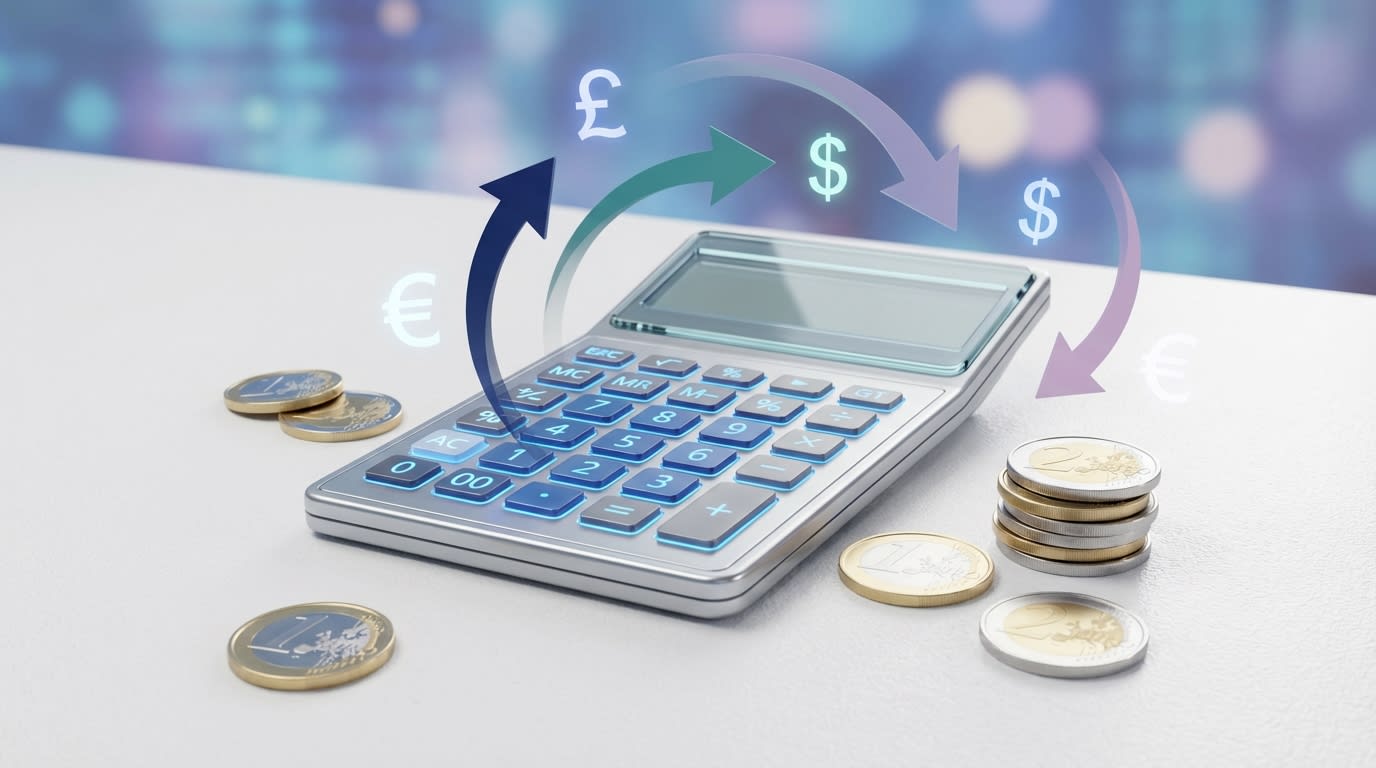
Accurate currency conversion ensures your tax reporting aligns with federal expectations.
Beyond the mandatory fields, you need to handle edge cases like international currencies and language preferences properly.
1. Currency Conversion Rules
If you invoice in USD or GBP, the VAT amount must still be shown in Euros (EUR) for German tax authorities. You must use the official exchange rate published by the BMF (Federal Ministry of Finance) for the exact time of the transaction. Good invoicing software handles this multi-currency conversion automatically, pulling live BMF rates to keep every document perfectly aligned with tax office expectations.
2. Language Requirements
Legally, invoices can be issued in any language. However, the German Finanzamt has the right to request a certified translation at any time. Your best practice is to issue bilingual invoices (English/German) or use exact German legal strings for tax exemptions. This prevents unnecessary delays in processing. Bilingual templates also build massive trust with German buyers who appreciate seeing familiar legal terms on their purchase receipts.
V. Conclusion
So there you go—meeting German VAT invoice requirements might seem like walking through a legal minefield, but it comes down to standardizing your data. By ensuring you have the correct tax numbers, mandatory legal phrasing, and a GoBD-compliant system, you protect your business from unnecessary audits and fines.
Preparing now for the 2025 electronic invoicing shift will put your store far ahead of the competition. You do not have to build these templates from scratch or worry about changing laws on your own. Automation handles the heavy lifting for you. You've got this!
Follow the Fordeer Team for more useful updates!
- Install Fordeer Apps for Free
- Get immediate assistance by chatting with us
- Join Fordeer Commerce Community for fresh app updates, expert tips, and private deals.