

Video Commerce on Shopify: What's Working in 2026


Constant algorithm updates are exhausting. You spend massive budgets on video creation, but proving direct return on investment compared to static ads remains difficult. This changes now. A data-backed shopify video commerce strategy 2025 is no longer optional. The industry is pivoting from simple social engagement to direct, on-site shoppable video. Relying purely on external platforms leaves money on the table. Here is what you will learn today. We cover the data behind vertical video, actionable strategies to turn authentic user content into sales, and the technical SEO secret your competitors ignore. Let's get started.
I. The State of Video Commerce in 2025
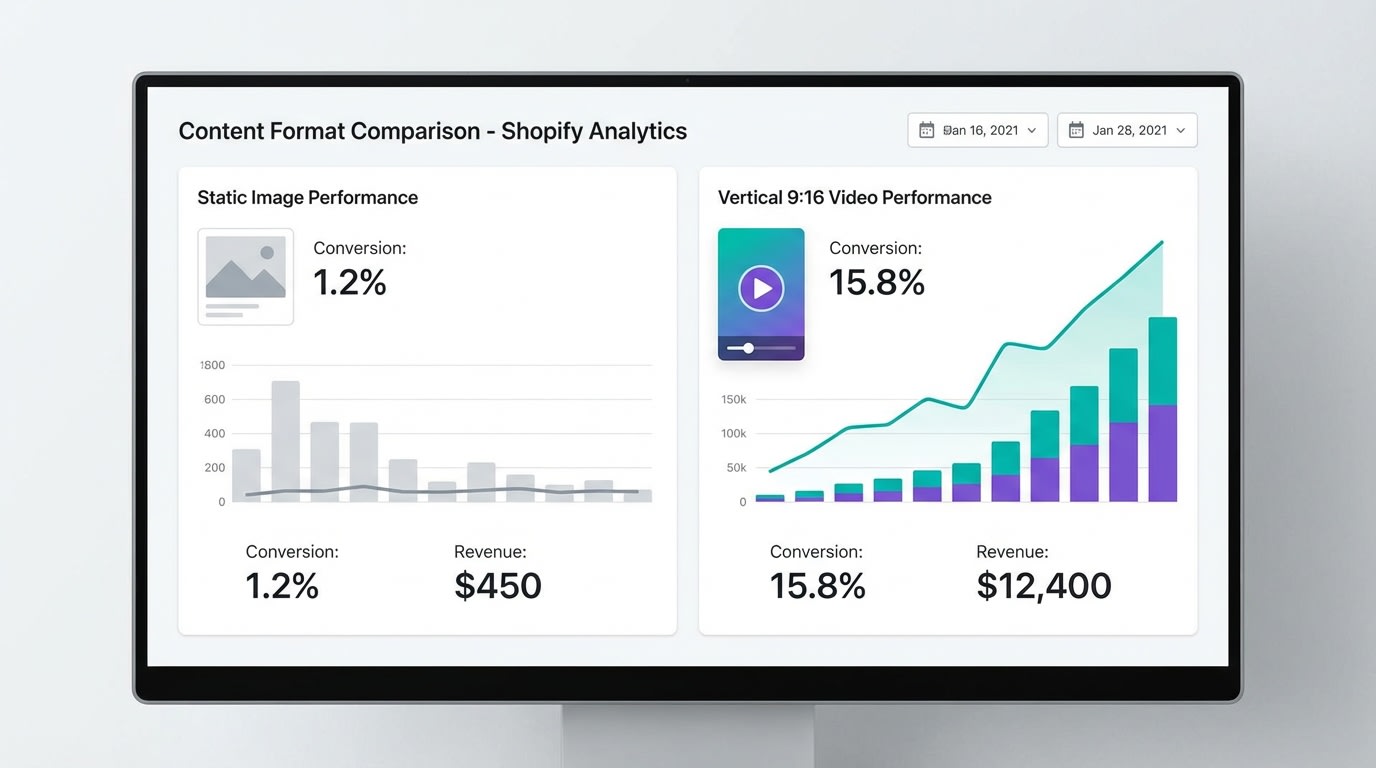
Video commerce is shifting from top-of-funnel awareness to bottom-of-funnel conversions.
1. The Authenticity Paradox & UGC Dominance
High-production studio videos yield lower returns than lo-fi smartphone footage. Shopify data shows merchants rapidly shifting budgets toward authentic, creator-led content. Raw video builds immediate trust because it acts as undeniable social proof. For help sourcing this material, read The Complete Guide to User-Generated Content for eCommerce. This strategy gives merchants a massive advantage.
2. Vertical vs. Horizontal: The CPA Reality
The performance gap between 9:16 vertical and 16:9 horizontal formats is massive. Short-form video dominance dictates a strict 9:16 focus for your product pages. When looking at 9:16 product video conversion rates, vertical formats consistently lower your Cost Per Acquisition. Modern shoppers consume content vertically. Forcing screen rotation creates friction. Video marketing statistics 2024 prove static images cannot compete.
3. The Shift to Direct Commerce
Passive viewing is obsolete. Interactive video content is the new standard. Keeping users on your Shopify storefront with shoppable elements prevents painful drop-off rates. Recent Hubspot B2B video marketing stats highlight a total necessity for measurable ROI. Direct commerce means viewers watch, click, and buy within the exact same window.
II. 6 Strategies to Scale Your Video Revenue
Executing an ecommerce video strategy requires prioritizing authenticity and friction-free shopping over Hollywood production values. Here is how to implement these tactics today.
1. Implement Shoppable Overlays on Product Pages
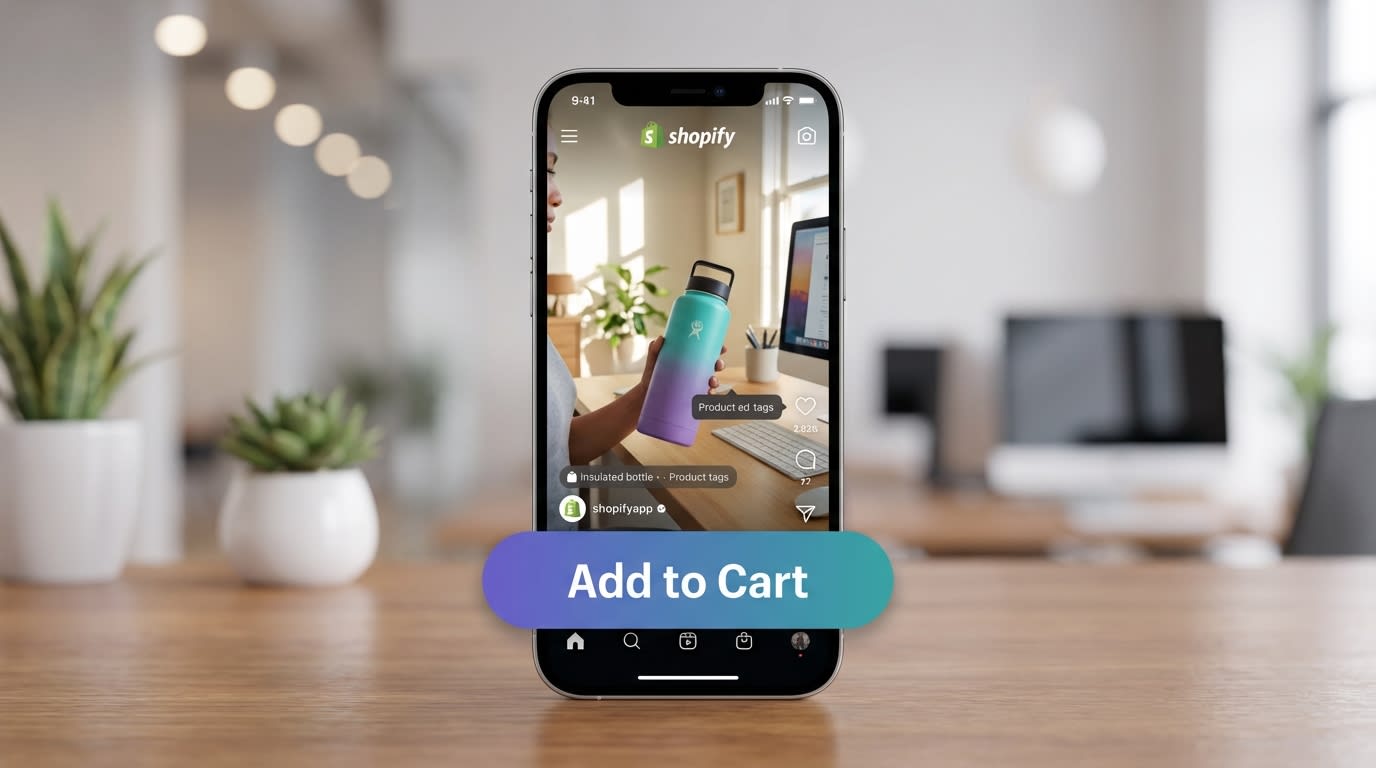
Reduce friction by letting customers buy directly from the video player.
Minimizing clicks to purchase is critical. Users lose interest quickly if they have to leave a video to hunt for the product link. This tactic immediately shifts video from awareness to conversion.
How to implement:
- Use native integrations: Utilize apps like ReelPik Shoppable Videos to embed content directly on-site.
- Enable in-video checkout: Ensure the overlay includes size or color variations and an immediate checkout button.
- Place strategically: Add these above the fold on high-traffic product pages.
2. Leverage AI Tools to Cure Production Fatigue
The technical barriers and costs of constant content creation are incredibly high. Artificial intelligence solves this bottleneck.
- Automate Demos: Use tools like HeyGen to turn static product images into dynamic lifestyle videos.
- Generate B-Roll: Utilize Sora by OpenAI for high-quality background footage without hiring a videographer.
- Stay Compliant: Always disclose AI-generated models if used for product representation. Maintaining AI video ethics in ecommerce builds long-term customer trust.
3. Build an Ongoing UGC Pipeline
You need a steady stream of social proof to keep product pages fresh. Building a content engine is essential for ongoing growth.
Here is how to do it:
- Post-purchase incentives: Automate emails offering immediate discounts in exchange for video reviews.
- Shopify Collabs: Use the native platform to seed products to micro-influencers.
- Create brief guidelines: Instruct creators to focus heavily on the first 3 seconds. Require native 9:16 shooting.
Pro Tip: Do not script your creators. Tell them the problem your product solves and let them explain it naturally.
4. Optimize for Muted Playback
Mobile consumer behavior demands visual clarity without sound. Most social feeds are scrolled entirely on mute.
Follow these rules:
- Assume zero volume: Your video must make complete sense silently.
- Dynamic captions: Hardcode bold, animated text into the center of the screen. Avoid the bottom safe zones where interface buttons sit.
- Visual pacing: Cut scenes every two to three seconds. This maintains high visual engagement when audio cues are absent.
5. Utilize Shopify Magic AI for Metadata
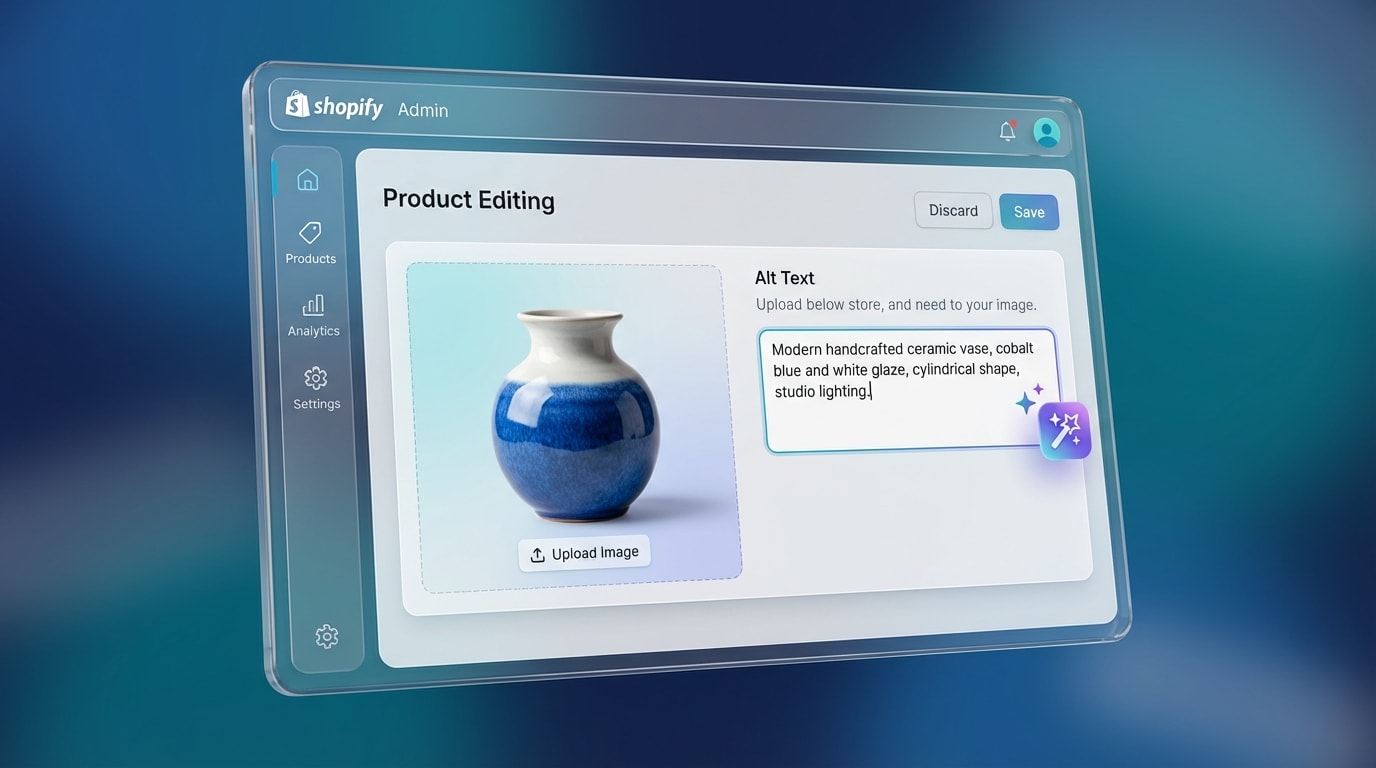
Streamline your backend workflow by letting AI handle your video tagging.
Bridging the gap between visual content and backend management is vital. Blank metadata hurts accessibility and internal site search functionality. Fixing this is covered extensively in The Complete Guide to Increase Shopify Conversion Rates.
How to implement:
- Auto-generate tags: Use Shopify Magic AI to instantly create product descriptions and alt-text for video thumbnails.
- Keyword mapping: Ensure phrases like shopify video commerce 2025 are woven naturally into file names before uploading.
6. Repurpose Ads into Support Resources
Maximizing the ROI of a single asset saves time and money. Every video must serve multiple purposes.
- FAQ Videos: Embed successful user content explaining how to use the product into your Help Center.
- Post-Purchase flows: Include tutorial shorts in the delivery confirmation email. This reduces customer support tickets and buyer remorse.
- Retargeting: Review engagement graphs to spot where viewers drop off. Trim the video and use the best 5 seconds for retargeting static CPA campaigns.
III. Technical Video SEO: Google's Easy Mode
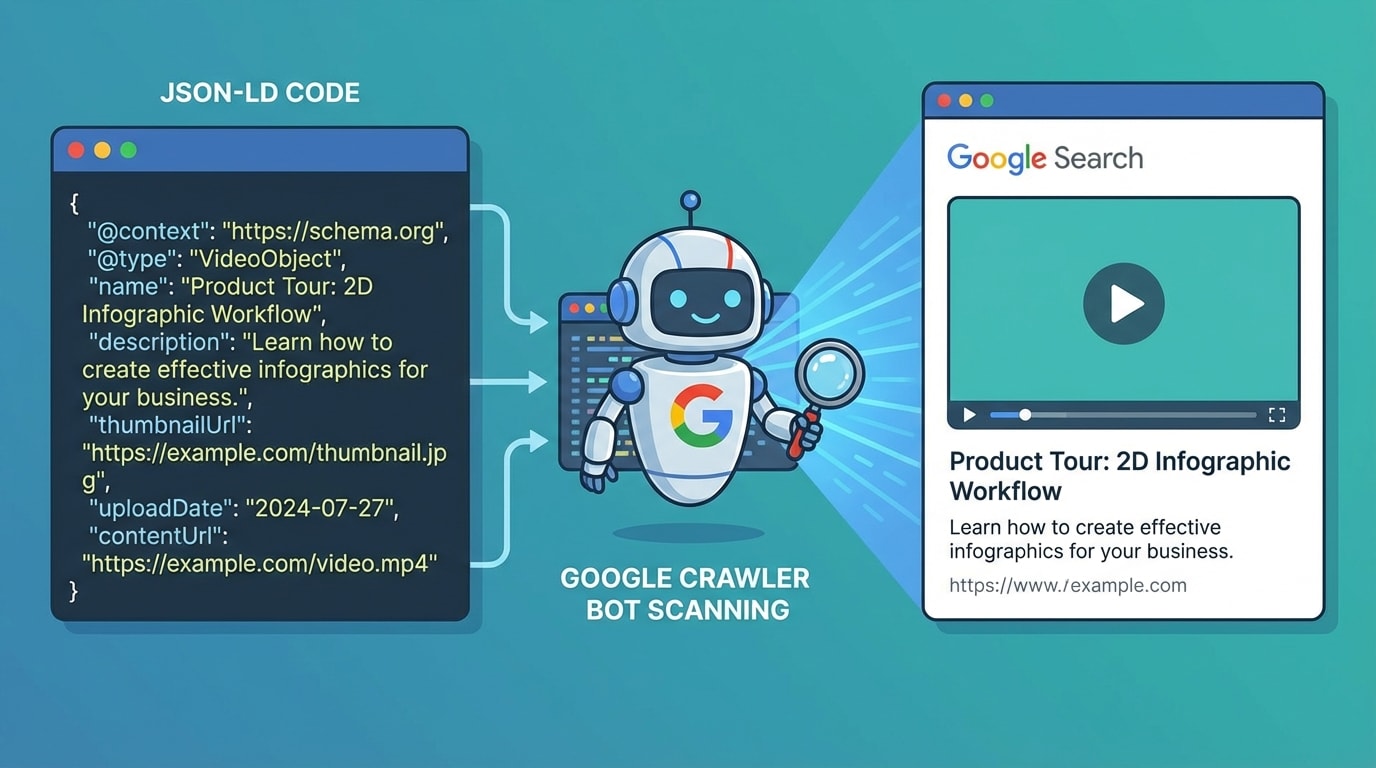
If search engines can't 'read' your video, you are missing out on high-intent organic traffic.
Many merchants spend thousands on production but fail to rank. Search engines cannot watch a video. The 2025 technical pivot moves away from simple keyword stuffing. Focus entirely on transcript-driven discovery.
1. Implement Video Schema Markup (JSON-LD)
Video schema for shopify is your secret weapon. Schema.org/VideoObject is backend code that explicitly tells search engines what your media contains. It is the only way to get your content to appear in the dedicated Google Video tab or as rich snippets in standard search results. YouTube does this automatically. However, videos hosted directly on your storefront require specific apps or theme code adjustments to inject this necessary data.
2. Prioritize Transcript Indexing
Search engines crawl text, not pixels. Extract the spoken transcript from your user-generated content. Place this transcript as collapsible text beneath the video player on your product page. This strategy allows you to rank for long-tail queries naturally mentioned by creators. It transforms a visual asset into indexable text.
3. Shopify-Specific Sitemap Optimization
A dedicated video sitemap ensures correct indexing. Verify your store architecture properly flags visual content to Google Search Central. This is the ultimate low-effort strategy for capturing top-of-funnel organic traffic. Your competitors rely solely on paid ads while ignoring this backend foundation. Submit your updated sitemap through Google Search Console immediately after publishing new media.
IV. Conclusion
A winning video marketing strategy does not require massive production budgets. It relies on combining authentic 9:16 vertical content, direct shoppable overlays, and robust technical SEO schema. This exact combination turns casual viewers into loyal buyers.
You do not have to implement all AI tools and schema markups overnight. Start by making just one high-traffic product page shoppable and scale up from there. You have the tools to do this efficiently today.
Follow the Fordeer Team for more useful updates!
- Install Fordeer Apps for Free
- Get immediate assistance by chatting with us
- Join Fordeer Commerce Community for fresh app updates, expert tips, and private deals.