

Organic Product Labels on Shopify: Build Trust with Certified Buyers

Sustainability is no longer just a trend. It is a baseline expectation for modern consumers. However, as more merchants rush to capture the growing green market, many fall into the trap of greenwashing. Claiming an item is eco-friendly without the proper proof can severely damage your brand reputation and lead to serious legal repercussions.
For modern eco friendly brands, navigating this landscape means understanding both the law and the technology behind consumer trust. Choosing to sell a shopify organic label product is only half the battle. You also need a foolproof, automated way to verify and display that authenticity to your customers at the crucial moment of decision-making.
In this guide, we break down the strict legal requirements for organic labeling. We will also highlight trending categories backed by 2026 data and provide a step-by-step technical tutorial on how to add organic label shopify badges automatically.
Let's get started!
I. Overview of Organic Compliance and Legal Rules
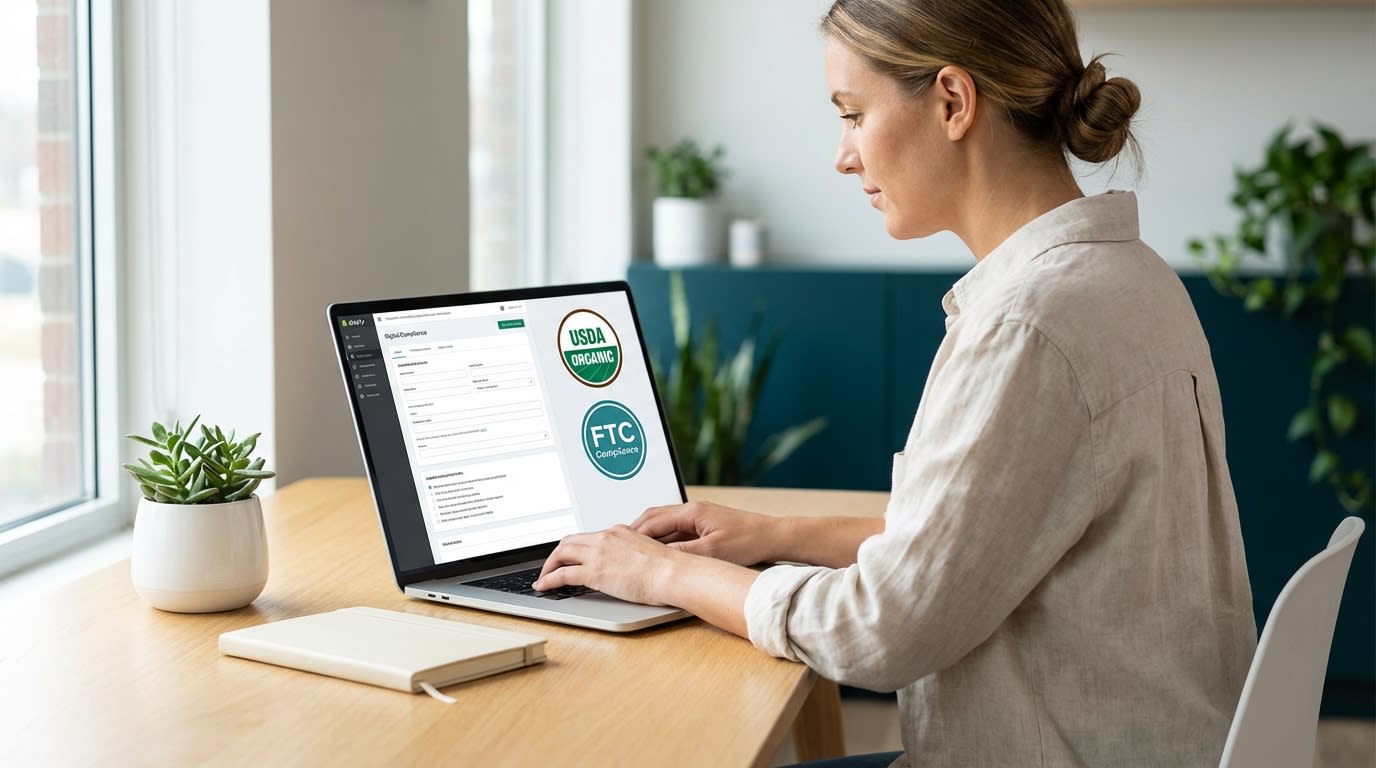
Protect your brand by understanding the legal boundaries of organic commerce
Protecting your brand starts with understanding the rules. Misusing terms can cost you customers and trigger massive fines.
1. The Sustainable Products Definition
What exactly is a sustainable product? The sustainable products definition in eCommerce refers to items created, used, and disposed of in a way that minimizes environmental impact.
However, you must separate generic terms like natural or eco-friendly from legally binding terms like organic. Anyone can call a bamboo shirt natural. Only certified brands can legally label it organic. Using precise, verifiable language protects your customer lifetime value. Shoppers will abandon brands they catch exaggerating their environmental impact.
2. Regional Legal Requirements for Labeling
Selling globally means navigating different legal requirements for organic labeling e-commerce. You need to know the rules for your target markets.
- The US Market: You must comply with USDA Organic standards and the FTC Green Guides. The FTC actively penalizes businesses for misleading environmental claims.
- The UK and EU Markets: These regions enforce strict consumer protection laws. You must provide clear, documented proof of your entire supply chain to use eco-labels.
Ignoring these regulations creates massive legal liability. Always verify your suppliers before marketing an item as organic.
3. The Role of Global Certifications
Customers want proof before they buy. This is where third-party authorities step in. Organizations like the Global Organic Textile Standard (GOTS) and B Lab provide verifiable trust signals.
Displaying a GOTS certification icon shopify badge directly impacts your conversion rates. Middle-of-funnel buyers actively look for these specific symbols when comparing products. Verified certifications prove your claims are real. This shifts hesitant shoppers straight to the checkout page and justifies premium pricing.
II. Top Shopify Organic Label Product Categories
Shopify recently identified 38 bestselling eco-friendly products projected to dominate 2026. Data shows consumers are willing to pay up to 20% more for verified sustainable goods. Here are the most profitable categories to target.
- Apparel & Organic Dropshipping: The print-on-demand clothing market is shifting heavily toward sustainability. Sourcing GOTS-certified cotton t-shirts and hoodies yields higher profit margins. You just need to market them correctly with transparent sourcing details. Customers want to know exactly where their clothes come from.
- Eco Friendly Products for Students: This is a highly profitable, specific niche. Generation Z buyers actively seek out daily life eco friendly examples for their school supplies. Top performers include recycled notebooks, biodegradable phone cases, and organic canvas backpacks. Targeting students builds long-term brand loyalty early.
- Health, Beauty & Skincare: Consumers are hyper-aware of the ingredients they put on their bodies. This category has strict legal requirements, but the payoff is massive. A profitable shopify organic label product list in this niche includes organic serums, bamboo toothbrushes, and cruelty-free makeup. Always ensure your suppliers hold recognized cosmetic certifications.
- Circular Economy Goods: The circular economy focuses on reusing materials rather than creating new ones. Products made from post-consumer waste plastic and upcycled materials are projected to be top bestsellers in 2026. Selling upcycled bags or recycled home goods appeals directly to buyers looking to reduce their carbon footprint.
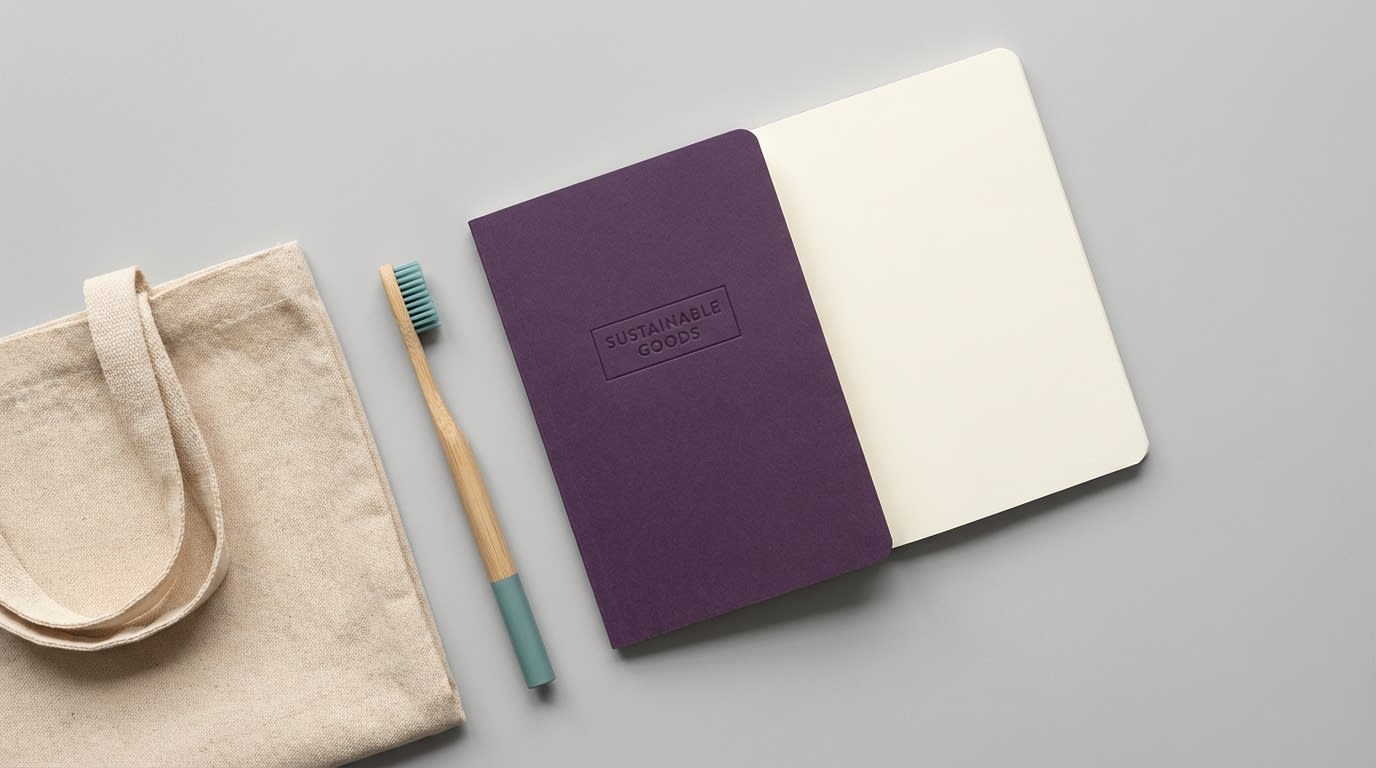
Targeting specific demographics like students can boost your eco-brand's profitability
III. 5 Steps to Automate Organic Labels on Shopify
Having incredible organic products is useless if your customers cannot immediately verify them. You need to bridge the technical gap. Here is exactly how to display compliance badges securely and automatically across your entire storefront.
1. Organize Your Metafields and Product Tags
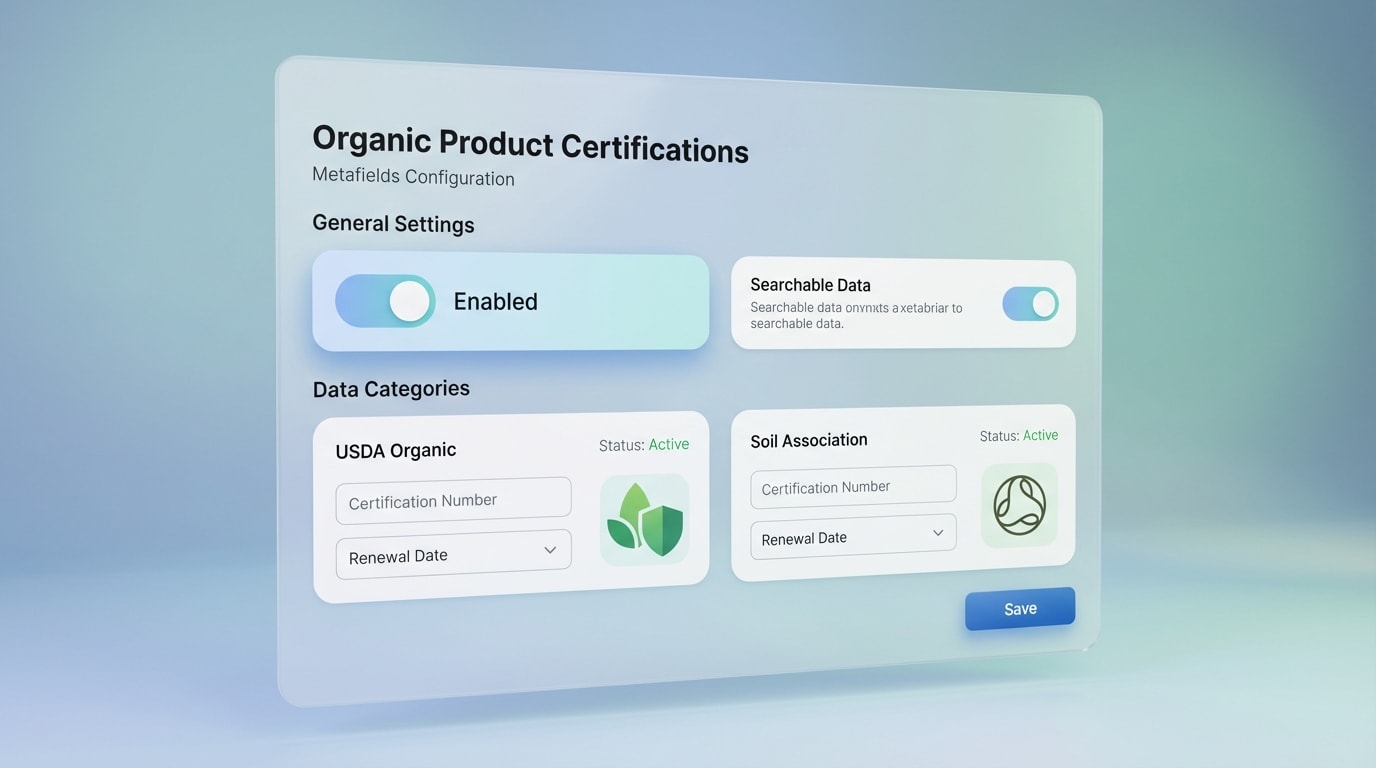
Proper tagging is the foundation of automated badge display
Before adding any visuals, you need clean backend data.
Why this matters: Relying on manual image editing for every product is unscalable. It also leads to frustrating errors. Metafields allow your Shopify store to automatically know which products hold active certifications.
How to implement:
- Create Custom Metafields: Navigate to Shopify Settings > Custom data > Products. Create a true/false field specifically for "Organic Certification".
- Standardize Tags: Use consistent product tags like
gots-certifiedorusda-organic. Never mix formats. - Audit Your Inventory: Check your supplier documentation carefully. Ensure only legally compliant products receive these specific tags to avoid FTC violations.
2. Install a Dedicated Product Badge App
Do not mess with Liquid code snippets if you do not have to.
Why this matters: A shopify product badge app handles the heavy lifting. It ensures your labels look perfect on both mobile and desktop screens without slowing down your site speed. Fast loading times keep your conversion rates high.
How to implement:
- Choose the Right Tool: Look for applications like the Fordeer App that support dynamic display rules based on tags and metafields.
- Connect to Your Theme: Ensure the app integrates cleanly with your specific Shopify theme 2.0 architecture.
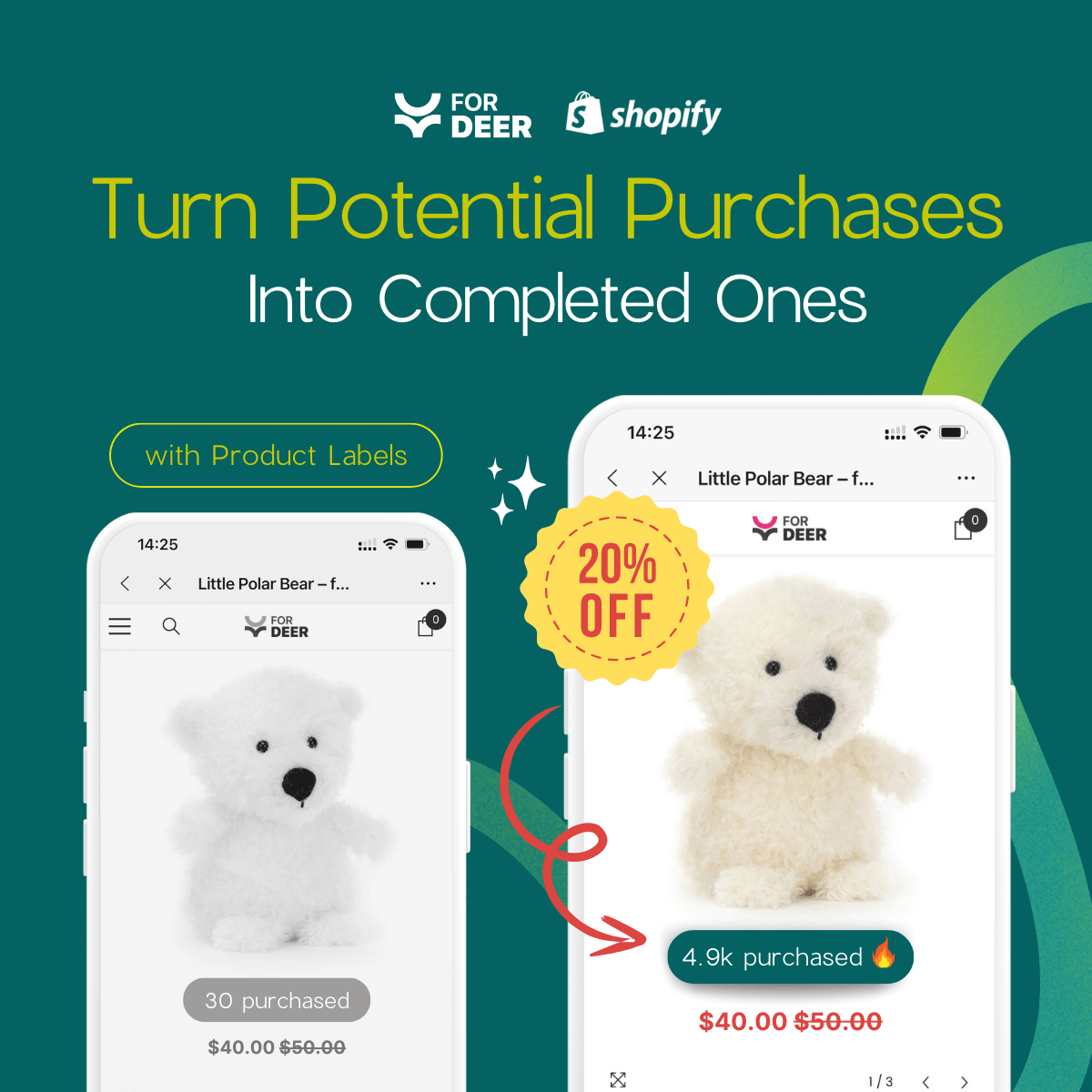
- Set Up Promotions: You can use these same tools for discounts. Read our guide on how to use product labels to highlight special offers on Shopify to maximize your app usage.
- Test Responsiveness: Always verify that the badges do not obscure vital product images on smaller mobile screens.
3. Upload Verified Certification Icons
You need to upload high-quality, recognizable trust signals.
Why this matters: Blurry or unofficial badges look like scams. High-resolution, official icons build instant Experience, Expertise, Authoritativeness, and Trustworthiness. This is what convinces a cautious shopper to click the buy button.
How to implement:
- Source Official Assets: Download the official media kits directly from the USDA or GOTS websites.
- Format Correctly: Save your badges as transparent PNGs or SVGs. This ensures they blend seamlessly over your product photography.
- Avoid Clutter: Limit yourself to the 2-3 most impactful certifications. Too many badges will overwhelm the buyer and make the page look messy.
Pro Tip: Never alter the colors or proportions of official certification logos. Doing so can void your right to use them and trigger legal action from the certifying body.
4. Automate Display Rules by Category
Set your logic up once and let the system do the work for you.
Why this matters: Automation ensures consistency. When you import a new organic dropshipping product, the correct label applies instantly without any manual intervention. This saves you hours of tedious store management.
How to implement:
- Set Logic Conditions: Open your badge app and create a specific rule. For example: If the product tag contains
usda-organic, then show the USDA badge. - Optimize Positioning: Place the badge in the top-left corner of the product image. Alternatively, place it directly below the Add to Cart button for maximum visibility.
- Exclude Non-compliant Variants: Pay attention to product options. If only the green color variant is organic, ensure the badge dynamically hides when a conventional red variant is selected.
5. Optimize Product Pages for SEO and Trust
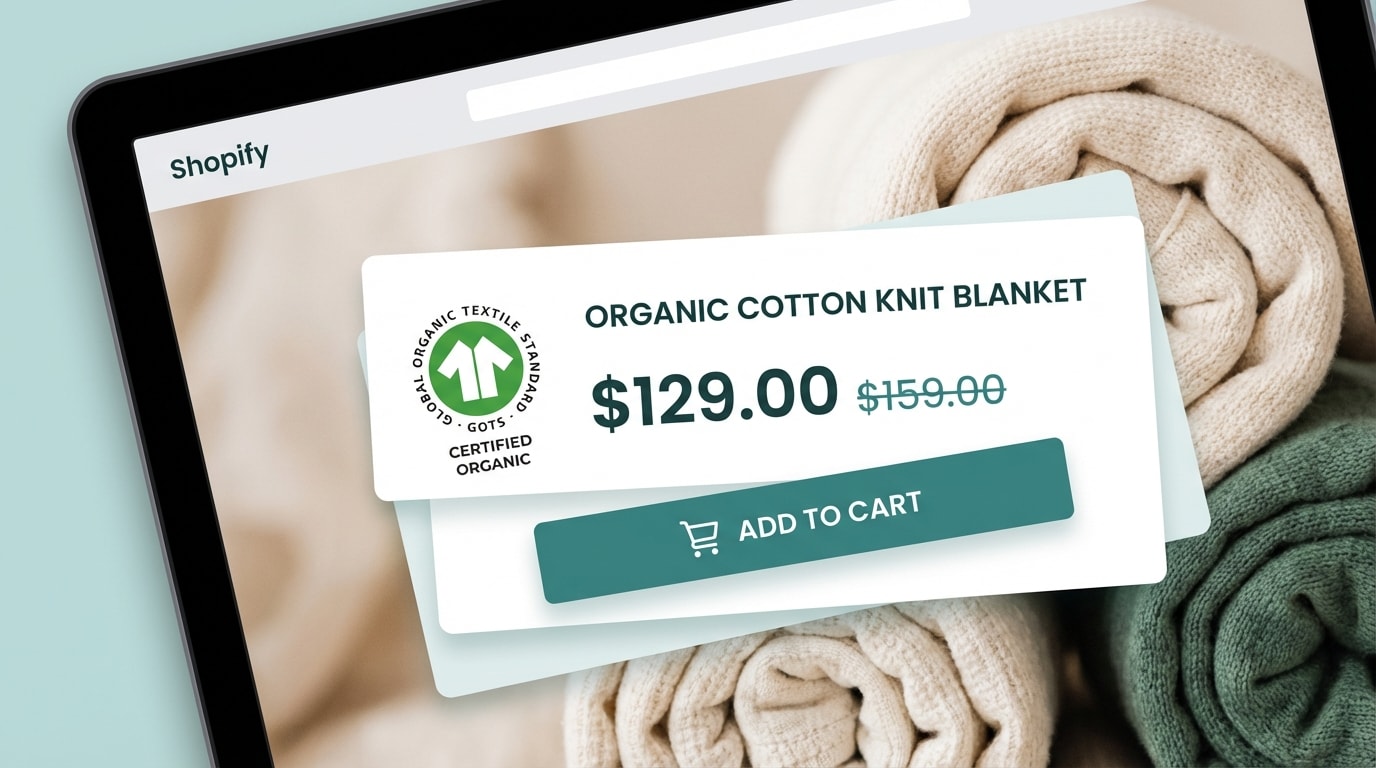
Combine visual badges with strong SEO copywriting for maximum conversion
The visual badge catches the eye, but the copywriting closes the sale.
Why this matters: Search engines cannot read an image badge. You must pair your visual labels with semantic SEO keyword integration to rank high on Google search results.
How to implement:
- Alt Text: Add descriptive alt text to your product images. Explicitly mention the certification name in the text.
- Description Detail: Dedicate a specific paragraph in your product description detailing exactly what makes the item organic. Explain the sourcing.
- Link to Policies: Hyperlink to a dedicated "Our Sustainability Promise" page. Detail your supply chain transparency to build unbreakable trust with your audience.
IV. Other Things to Keep in Mind
Beyond legalities and technical setup, your marketing efforts must align with your new organic positioning. Here are two vital strategies to support your launch.
1. Leverage User-Generated Content (UGC)
Authenticity is the absolute currency of green commerce. Encourage your customers to post photos of your products in use. Real people interacting with your eco-friendly items provides social proof that a static organic marketing efforts campaign simply cannot match. If you need more inspiration, check out these creatives ideas to utilize Shopify product badges to attract customers alongside your UGC campaigns.
2. Educate Your Audience
Do not assume buyers know what B Corp or GOTS means. They need context to appreciate the value. Use your blog, social media channels, and email flows to educate them. Explain exactly how their purchase positively impacts the circular economy and reduces their daily carbon footprint.
V. Conclusion
Selling a Shopify organic label product is one of the smartest moves you can make as consumer demands shift heavily toward sustainability. By understanding the legal requirements of the FTC, choosing the right high-margin categories, and using smart technical automation to display your verified badges, you build an airtight brand that customers trust implicitly.
Preparation and transparency will set you apart from competitors. You do not have to overhaul your entire catalog at once. Start by tagging your top-performing sustainable items and adding automated badges today. Each step you take builds a more profitable, legally compliant green business.
Follow the Fordeer Team for more useful updates!
- Install Fordeer Apps for Free
- Get immediate assistance by chatting with us
- Join Fordeer Commerce Community for fresh app updates, expert tips, and private deals.