

UGC for Fashion Brands on Shopify: Build a Feed That Actually Sells Clothes


High production photography used to be the gold standard for apparel. Today, perfectly polished studio shots often trigger consumer skepticism. With the sudden rise of AI-generated models, shoppers actively look for raw photos from real people before they feel comfortable checking out. If your store lacks this authentic social proof, you are bleeding sales at the finish line.
Strategic implementation of Shopify UGC for fashion brands is no longer just about reposting nice customer photos. You must turn casual outfit tags into shoppable revenue engines. Middle-of-funnel shoppers need to see exactly how a garment fits on different body types before making a purchasing decision.
In this guide, we break down what authentic content means for fashion right now. You will discover exactly how to collect, manage, and embed shoppable media directly into your theme without slowing it down.
Let's get started!
I. Overview of the 2025 Authenticity Pivot
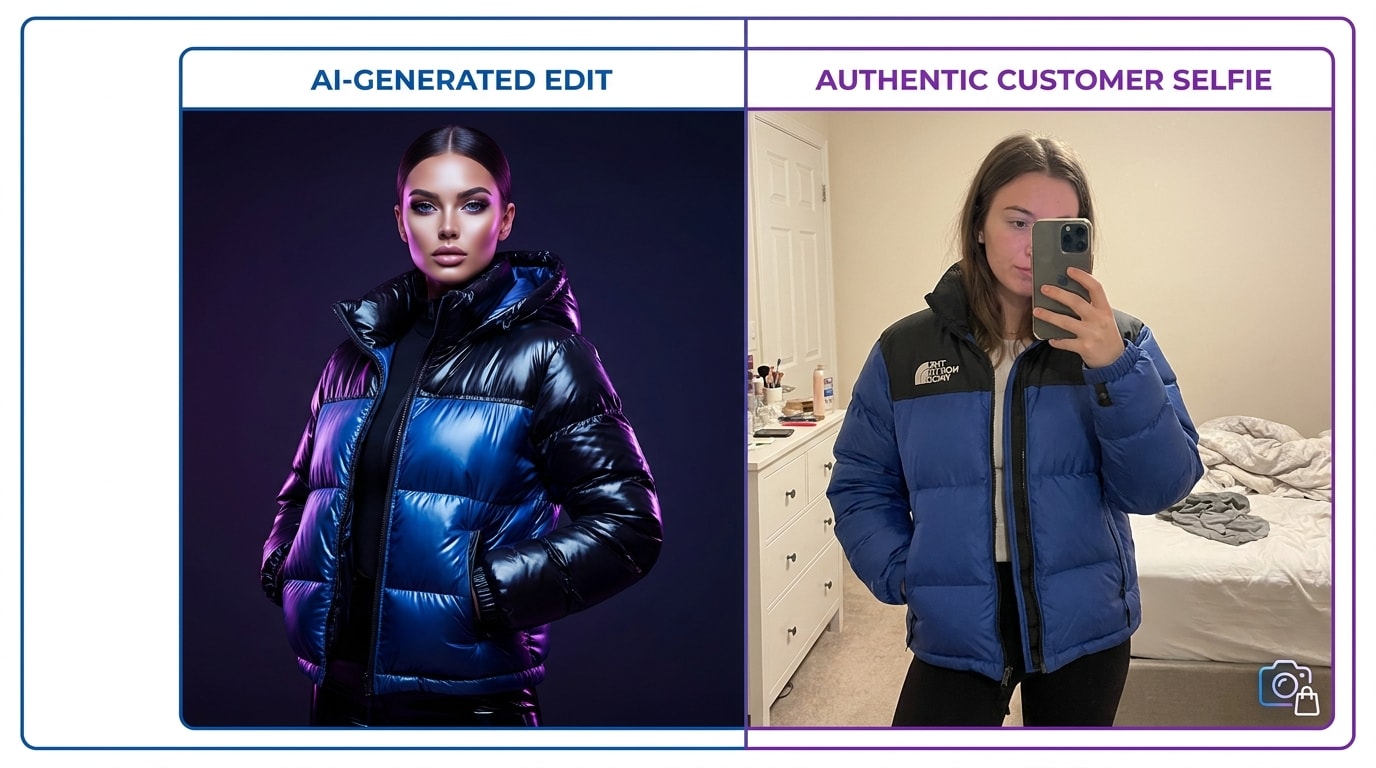
The contrast between synthetic media and genuine user-generated content is defining brand trust.
1. What UGC Style Meaning Actually Is
The transition from heavily curated influencer feeds to raw Outfit of the Day (OOTD) aesthetics is here. For apparel, buyers want to see fabric movement, real-life lighting, and genuine styling. They want to see how a pair of jeans fits on someone with their exact body type, rather than a studio-perfect mannequin. True authenticity means leaving the minor imperfections in the photo. Your customers want to see real wrinkles in the fabric and natural lighting from a bedroom window.
2. The Threat of Synthetic AI Media
The 2025 trend of synthetic AI-generated models presents a massive risk to your conversion rates. Using AI to generate fake lifestyle shots destroys brand trust instantly. Modern consumers are highly skilled at spotting synthetic textures and unnatural lighting. Fashion brands that stick to real human content will command a premium in consumer loyalty. Honesty is now your strongest differentiator. When a shopper spots a fake AI model, they immediately assume the product quality is equally deceptive.
3. The ROI of Real Social Proof
Authentic media lowers customer acquisition costs over time. According to Shopify Community Insights, authentic phone-shot reviews consistently outperform professional studio ads in click-through rates. The famous Fashion Nova case study proves this point clearly. By integrating massive amounts of customer photos across their product pages, they significantly increased their Average Order Value (AOV) and brand visibility. Shoppers buy more when they completely trust what they see on their screens.
II. 7 Strategies to Turn Shoppable Shopify UGC into Sales
If you want to move beyond basic Instagram reposts and actually drive revenue, you need a systematic approach. Here are the most effective ways to make your customer content work for your bottom line.
1. Build Shoppable Galleries with OS 2.0
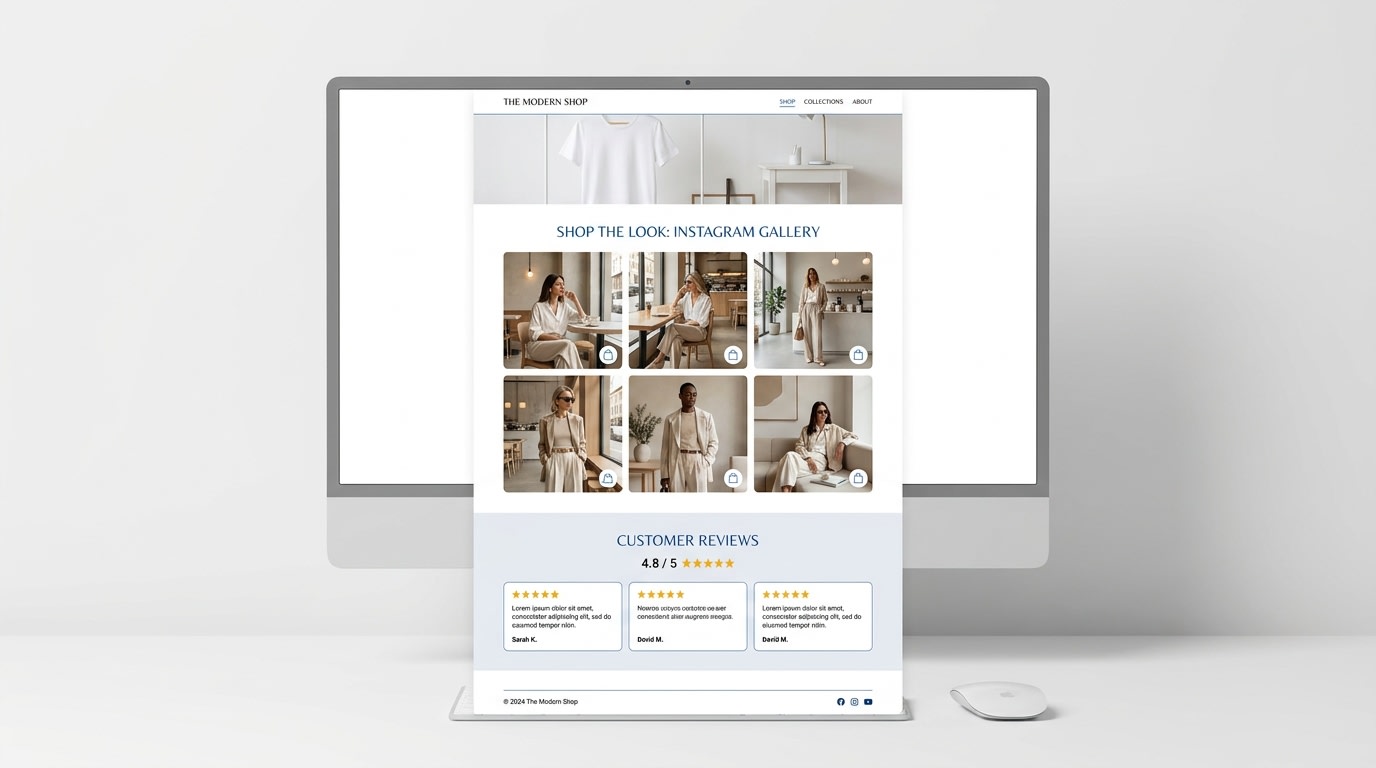
Shoppable galleries shorten the path to purchase by letting customers buy exactly what they see in the photo.
Turning a static photo into a direct sales channel is your first priority. Customers want to click a real-world outfit photo and immediately add those specific items to their cart. Visual proof combined with easy purchasing is a proven revenue driver. To learn more about setting this up, check out our guide on Converting Visitors into Clients: The Impact of Social Proof Widgets.
How to implement:
- Use native blocks: Utilize Shopify Online Store 2.0 blocks to embed galleries seamlessly rather than relying on clunky custom code.
- Tag multiple items: Ensure your shoppable widgets allow tagging multiple product SKUs in a single image to increase AOV.
- Place strategically: Add these galleries below the fold on product pages and on a dedicated shopping page.
2. Transition Organic Content into Meta and TikTok Ads
Organic reach is great, but amplifying your best customer content through paid channels is where scaling happens. Standard UGC ads examples show that real customer reactions outperform polished brand videos almost every time.
Here are the specific steps:
- Identify top performers: Look at your Instagram analytics to see which organic customer tags have the highest engagement rates.
- Run Spark Ads: Use TikTok Spark Ads to boost a creator's original video directly from their profile. This maintains the organic feel while putting paid reach behind it.
- Test ad variations: Run A/B tests using the raw customer video against your highly produced brand video. You will typically see a lower Cost Per Click (CPC) on the raw footage.
- Partner up: UGC influencer marketing is also highly effective here. Partner with micro-influencers to seed your initial content and run ads against their authentic reviews.
3. Automate Your Collection Funnel
You cannot build a reliable shoppable gallery if you only receive three tagged photos a month. You need a predictable pipeline of incoming assets. A consistent flow of fresh content proves your brand is active and popular right now.
Here is how to build your funnel:
- Timing is everything: Set up automated email flows to request photo reviews exactly 7 to 10 days after the delivery date. Give them time to wear the item.
- Incentivize properly: Offer a tiered reward system. Give a 10% discount for a text review, but offer 20% for a high-quality video submission.
- Provide visual guidelines: Tell customers exactly what you want. Ask them for natural lighting and full-body shots so you can effectively use the content later.
Pro Tip: Make sure your post-purchase emails specifically ask customers to show how they styled the piece with other items in their closet.
4. Leverage Metaobjects for Product Tagging

Using metaobjects keeps your store architecture clean and fast.
Shopify introduced powerful new ways to structure data, and savvy merchants use them to handle media efficiently. Storing and retrieving user images properly prevents your site from slowing down, which is crucial for mobile shoppers.
How to implement:
- Create custom definitions: Use Metaobjects to create a custom data structure specifically for customer looks.
- Link directly to IDs: Map the uploaded customer photo directly to your specific Product IDs.
- Dynamic display: Use Liquid to dynamically pull these specific Metaobjects onto the relevant product pages without relying entirely on heavy third-party scripts.
5. Shift Focus to Shoppable Video
Static images are losing ground to short-form video. The modern apparel shopper expects to see how fabric drapes, stretches, and moves when a person walks. Implementing video properly can drastically improve your conversion metrics. For a comprehensive look at video strategies, read through The Complete Guide to User-Generated Content for eCommerce.
Focus on these areas:
- Prioritize try-ons: Encourage your community to film get-ready-with-me routines or unboxing hauls.
- Embed video natively: Use lightweight Shopify apps designed specifically for shoppable video feeds to mimic the swiping experience on your own domain.
- Highlight sizing context: Make sure video reviews include the creator's height and the size they are wearing. This instantly solves size anxiety.
6. Filter and Curate for Brand Consistency
Not all customer content is created equal. High-intent shoppers use photos to validate quality. Low-quality submissions can actually increase perceived risk. You cannot clutter your product pages with blurry, poorly lit bedroom selfies that actively detract from the garment.
How to curate effectively:
- Set up moderation rules: Use apps that allow manual approval before a photo goes live on your product page.
- Look for lighting and focus: Approve content that clearly shows the product in decent lighting, even if it is casually styled.
- Group by aesthetic: Curate specific galleries for different styling themes. Grouping vacation wear together helps shoppers navigate the content contextually.
- Reject the bad: Do not be afraid to reject photos that make the fabric look cheap or misrepresented.
7. Feature Micro-UGC at Checkout
The final hurdle in ecommerce is cart abandonment. When a customer reaches the checkout page, they often experience a sudden spike in hesitation. You need visual reassurance at this exact moment. Feature micro-UGC at checkout to reduce friction.
Here is what to do:
- Inject trust signals: Place small, highly curated customer quotes alongside thumbnail images directly on the checkout or cart drawer.
- Address objections: Select quotes that specifically mention fast shipping, true-to-size fit, or excellent quality.
- Keep it visual but small: Do not use massive galleries here. A simple carousel of three five-star photo reviews is enough to push a hesitant buyer over the finish line.
III. Essential Technical and Legal Foundation
Implementing these strategies requires a solid backend foundation. If you ignore the legal and technical debt, your marketing campaigns will quickly hit a wall.
1. Navigating Legal Rights and GDPR Compliance
One of the most common questions merchants ask is how to legally use a customer's photo in their ads. The rules are strict, and violations can result in expensive takedowns.
Just because someone tags your brand does not give you the legal right to use their photo in your paid advertising. That is implicit consent, which is incredibly risky. You need explicit digital rights management. Always reach out in the comments or via Direct Message with a specific phrase like: "We love this look! Reply with #YesBrandName to let us feature this on our site and ads." Once they reply, you have a documented trail of consent that complies with most privacy guidelines.
2. Avoiding Liquid Theme Technical Debt
Many fashion brands eagerly install four different review and gallery apps, only to realize their store now takes six seconds to load. Embedding media via outdated third-party JavaScript injects massive technical debt into your Liquid theme.
Instead of relying on heavy scripts that render after the page loads, look for modern solutions that integrate directly with Shopify Online Store 2.0 blocks. App blocks load natively within your theme architecture. This ensures that your high-resolution customer photos do not destroy your page speed and SEO rankings. Faster pages mean higher conversions.
3. Tracking UGC-to-ROAS Performance
You need to know if your authentic content is actually outperforming your professional photography. Set up clear UTM tracking for any media you use in Meta or TikTok campaigns.
Inside Shopify, monitor the AOV and conversion rates of product pages featuring robust shoppable galleries versus those without. You will typically find that pages rich in user media hold visitors longer and convert at a noticeably higher percentage. As your sales volume grows from these authentic campaigns, you can manage the increased order demand efficiently using automated invoicing tools like Fordeer Invoice Order Printer to keep your backend operations running perfectly.
IV. Conclusion
Transitioning your Shopify store from relying solely on expensive studio photography to leveraging authentic social proof is the most impactful move you can make in 2025. Consumers crave real human interaction and verifiable proof before they buy apparel online.
By building shoppable galleries, managing digital rights properly, and keeping your theme blazing fast with OS 2.0 blocks, you turn your existing customer base into your most profitable marketing team. You have the strategies and the technical blueprint. Now it is time to start collecting those high-converting outfit shots and driving revenue.
Follow the Fordeer Team for more useful updates!
- Install Fordeer Apps for Free
- Get immediate assistance by chatting with us
- Join Fordeer Commerce Community for fresh app updates, expert tips, and private deals.